[email protected]WhatsApp: +8618857971991
ISO 13485-Oriented Medical Tube RFQ Support
LogoMedical Hypotubes
Get a Quote
LogoMedical Hypotubes
WhatsApp
ISO 13485 & 9001-Oriented QMS
Burr-Free Electropolished Finish
CTQ Microscopic Inspection
Prototype to Mass Production
LogoMedical Hypotubes

ISO 13485-oriented sourcing support for medical hypotubes, nitinol tubing, catheter marker bands, and laser-cut micro tube components.

Inquiry Email

[email protected]

Email app

Best for drawings, tolerance tables, inspection needs, and quote history.

Instant Chat

+8618857971991

Chat on WhatsApp

Fast path for OD/ID, material, sample quantity, and lead-time questions.

ISO 13485:2016-Oriented QMS
ISO 9001:2015-Oriented QMS
Products
  • Medical Hypotube
  • Laser Cut Hypotube
  • Nitinol Tubing
  • Catheter Marker Bands
  • Endoscope Snake Bone Tube
  • Stainless Steel Tubing
Capabilities
  • 5-Axis Laser Cutting
  • Electropolishing & Passivation
  • Nitinol Shape Setting
  • PFAS-Free Medical Tube
  • Micro Tube Inspection
  • Rapid Prototyping
  • ISO 13485 Manufacturing
Applications
  • Balloon Catheter
  • Stent Delivery
  • Neurovascular
  • Endoscope Bending
Resources
  • RFQ Checklist
  • Engineering Blog
  • About Us
  • Contact / RFQ
  • Privacy Policy
  • Terms of Service
  • Cookie Policy
© 2026 Medical Hypotubes. All Rights Reserved.|Medical Hypotubes is an RFQ gateway operated by Linkup Ai Co., Ltd. for qualified precision medical tube manufacturing programs.|Legal entity: Linkup Ai Co., Ltd.
← Back to Resources

Laser Cut Hypotube Design Notes

Best practices for designing spiral and slotted laser cut patterns for optimal flexibility and manufacturability.
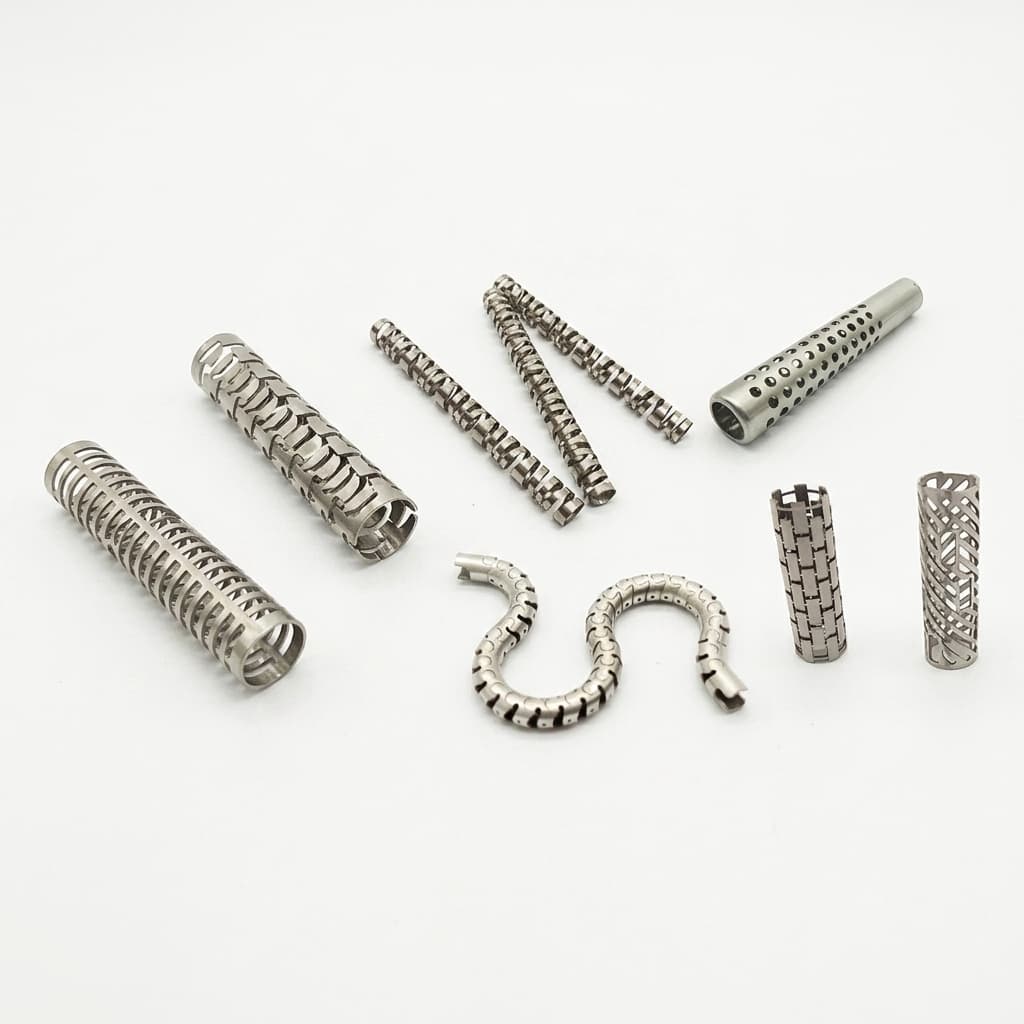
Best Fit For:R&D engineers designing steerable or flexible metal tube components.
laser cut hypotube pattern design for catheter flexibility planning

Guide Highlights

  • Pitch optimization
  • Kerf width limits
  • Transition zone strategies

Related Applications

  • Catheter shafts
  • Flexible endoscopes
  • Delivery systems

Engineering Focus

  • Continuous vs interrupted cut
  • Axial stiffness
  • Fatigue life considerations

Evaluation Parameters

MetricTypical RangeImpact on Procurement
Minimum Kerf10-20 umDefines how fine the pattern can be.
Pattern familyContinuous spiral, interrupted spiral, slot, window, jigsawEach pattern shifts the balance between flexibility, torque, pushability, and kink resistance.
Transition controlPitch, bridge width, uncut length, and distal stiffness rampMost catheter failures occur where stiffness changes too abruptly.

How to Use This Guide in Sourcing

Decision FactorConfirm Before QuoteBuyer Impact
Desired mechanical behaviorFlexibility, pushability, torque response, kink resistance, and compression limits.Helps choose a pattern family instead of copying a slot geometry without function context.
Pattern manufacturabilityKerf, bridge width, slot end radius, pitch changes, and minimum uncut ligament.Reduces cut-edge defects, weak bridges, and fatigue initiation in prototype samples.
Post-processing requirementElectropolishing, passivation, oxide removal, cleaning, and inspection magnification.Turns a laser-cut tube from a geometry sample into an assembly-ready component.

RFQ Preparation Checklist

  1. Specify the un-cut hypotube specs
  2. Provide flat pattern if available
  3. Detail any required surface finishing

Sourcing Risk Management

  • Premature fatigue failure: Electropolishing to remove micro-cracks from the heat affected zone.
  • Over-flexible shaft: Review axial compression, torque response, and bridge geometry before approving a spiral pattern.

Practical Review Sequence

  1. Define the shaft function: State whether the component primarily needs flexibility, torque, pushability, fluid delivery, or articulation.
  2. Select pattern logic: Match continuous spiral, interrupted spiral, slots, windows, or jigsaw geometry to the function.
  3. Review manufacturability: Check kerf, bridge width, slot ends, heat input, and fixture reach before sample cutting.
  4. Validate edge and mechanics: Inspect burr and recast condition, then validate bend, torque, kink, or compression behavior.

Evidence to Request From Suppliers

  • Flat pattern or tube drawing revision used for cutting
  • Slot width, bridge, pitch, and transition-zone inspection
  • Microscopic edge review for burr, slag, recast, and bridge integrity
  • Finishing record for electropolishing, passivation, or cleaning when specified

Related Products

spiral cut medical hypotube geometry for stiffness transition review

FAQ

Can you cut asymmetrical patterns?

Yes, using 5-axis laser cutting equipment.

Should I start with a spiral or interrupted spiral pattern?

Use continuous spiral when flexibility dominates and compression load is low; consider interrupted spiral or slots when torque and pushability must be preserved.

Related Buyer Paths

Related Links

  • 5-Axis Laser Cutting
  • Laser Cut Hypotube
  • Electropolishing & Passivation

Application Context

  • Stent Delivery Hypotube
  • Endoscope Bending Section Tube

Capability Context

  • Rapid Prototyping
  • Medical Micro Tube Inspection

Inquiry Email

[email protected]

Email app

Best for drawings, tolerance tables, inspection needs, and quote history.

Instant Chat

+8618857971991

Chat on WhatsApp

Fast path for OD/ID, material, sample quantity, and lead-time questions.