
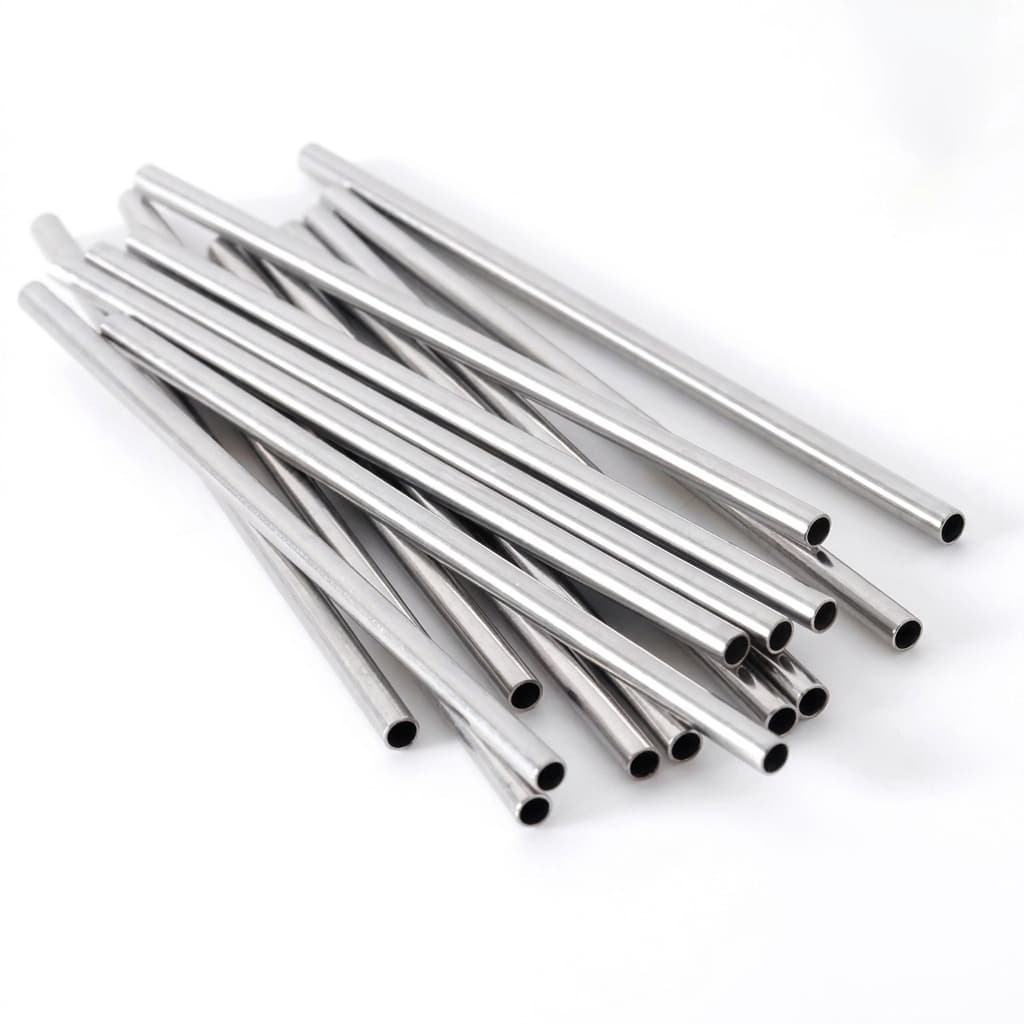
Electropolishing Medical Hypotubes: Why Burr-Free Surface Finishing Matters
Discover why electropolishing is a critical post-processing step for laser-cut medical tubing, detailing Ra surface roughness targets, fatigue resistance, and burr-free inspection standards.
When R&D engineers and sourcing buyers procure medical hypotubes, much of the initial focus is placed on material selection, OD/ID tolerances, and complex laser-cut geometries. However, one of the most critical determinants of the final component's safety, longevity, and assembly yield is often invisible to the naked eye: the microscopic surface finish.
In this technical breakdown, we explore why electropolishing is often specified for laser-cut medical tube programs, and why "burr-free" must be defined by strict engineering parameters rather than marketing buzzwords.
1. The Reality of Laser Cutting (The HAZ Problem)
Precision 5-axis laser cutting is the only viable way to create the intricate micro-features required for steerable catheters and endoscope articulating joints. However, laser cutting is essentially the localized melting and vaporization of metal.
This thermal process can leave behind three artifacts that need to be controlled:
- Slag and Dross: Re-solidified molten metal that aggressively adheres to the inner and outer cut edges.
- Micro-Burrs: Sharp, microscopic protrusions and jagged anomalies along the cut path.
- Heat-Affected Zone (HAZ): A localized area where the metal's crystalline microstructure has been severely altered by heat. The HAZ is significantly more brittle than the base metal and highly susceptible to micro-cracking.
2. The Danger of Micro-Burrs in Assembly & Use
If a laser-cut hypotube is used "as-machined" without appropriate post-processing, the risks can be significant:
- Polymer Jacket Tearing: Most catheter shafts are coated with a soft outer polymer jacket (such as Pebax® or Polyurethane). A sharp micro-burr will puncture or tear this jacket during the reflow process or during clinical navigation.
- PTFE Liner Damage: Inner lubricious PTFE liners can be scratched, skived, or compromised by internal burrs.
- Guidewire Friction: For stent delivery systems, internal roughness significantly increases the friction coefficient. This destroys the "tactile feedback" physicians rely on to pass guidewires or deliver stents smoothly.
3. The Science of Electropolishing
Electropolishing is an electrochemical process that acts as the reverse of electroplating. The stainless steel or nitinol hypotube is submerged in a temperature-controlled electrolytic bath (typically a sulfuric-phosphoric acid mix) and subjected to a direct electrical current.
Because current density naturally concentrates on high points, the process selectively dissolves the microscopic "peaks" (burrs and surface roughness) far faster than the "valleys."
The Measurable Engineering Benefits:
- Controlled Edge Smoothing: It rounds sharp laser-cut edges. Under 40x magnification, acceptance criteria should define how smooth and radiused the edges need to appear for the downstream assembly.
- Fatigue Risk Reduction: By reducing HAZ/recast and micro-cracks that act as stress concentrators, electropolishing can improve the flexural fatigue performance of the flexible section.
- Enhanced Passivation (ASTM A967): The process removes free iron from the surface of stainless steel, leaving behind a chromium-rich, highly passive oxide layer that strongly resists corrosion.
- Targeted Surface Roughness (Ra): While as-machined tubes might have an Ra of 0.8 μm to 1.5 μm, electropolishing can achieve ultra-smooth surfaces with Ra < 0.1 μm to 0.2 μm, minimizing friction for fluids and guidewires.
4. How to Specify Surface Finish in RFQs
To avoid supplier ambiguity, your engineering drawing and RFQ should explicitly state the acceptance criteria:
- Visual Standard: "Must be free of burrs, slag, dross, and sharp edges when inspected under 40x (or 100x) magnification."
- Process Requirement: "Component to be electropolished and ultrasonically cleaned."
- Roughness Standard: "Internal and External Surface Roughness: Ra ≤ 0.2 μm."
- Passivation Standard: "Passivate per ASTM A967 (for Stainless Steel) or ASTM F86."
At Medical Hypotubes, electropolishing and inspection planning is reviewed around tube material, wall thickness, slot geometry, burr limit, Ra target, and documentation needs. High-magnification microscopy and surface measurement can be specified as part of the release package. Contact us today to discuss your surface finish requirements.
More Posts
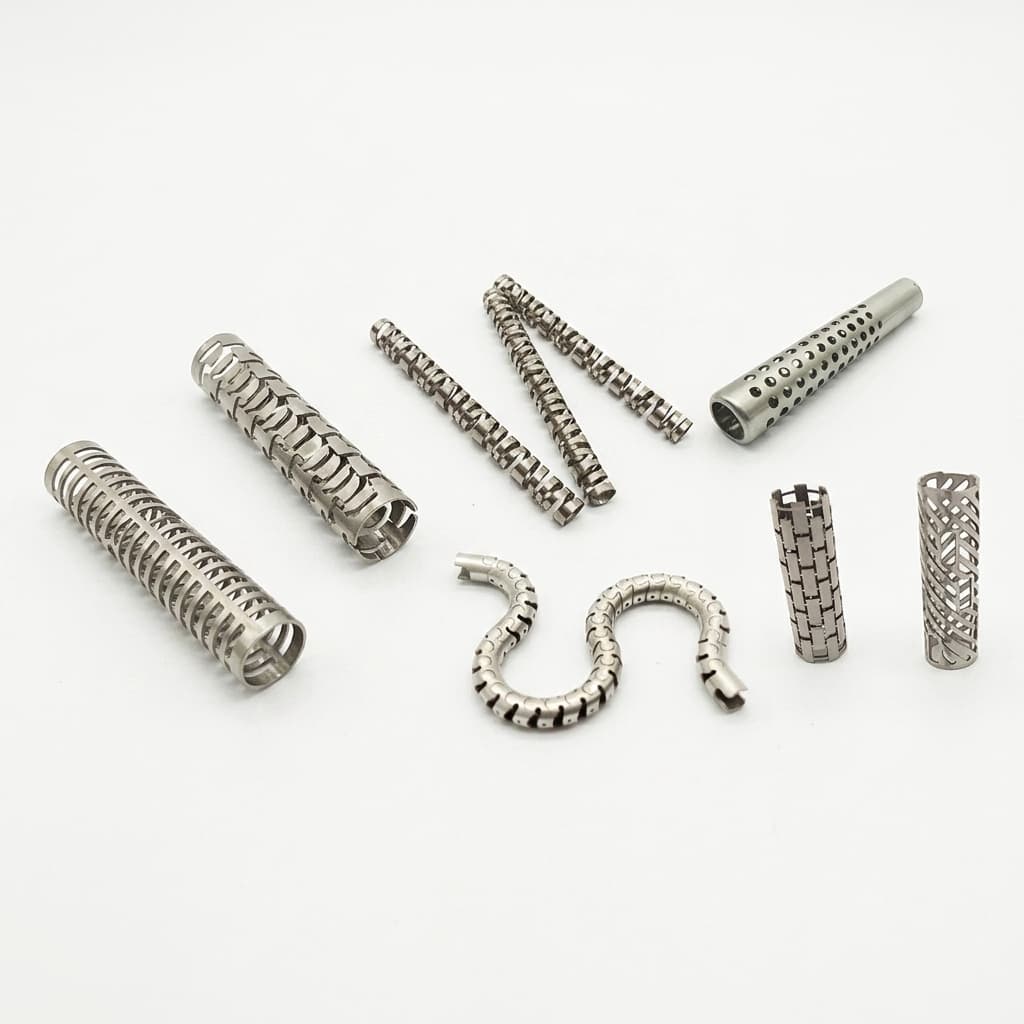
How to Specify Laser Cut Hypotube Patterns for Flexible Medical Devices
A technical engineering guide on designing and specifying laser-cut patterns for hypotubes, including spiral, interlocking, and hinge cuts, with precise RFQ dimensioning tips.

Medical Hypotube Miniaturization: Navigating Ultra-Thin Walls for Neurovascular Catheters
Medical hypotube miniaturization guide for ultra-thin neurovascular catheter walls. Compare tolerances, materials, failure modes, and RFQ trade-offs.
Nitinol vs. Stainless Steel in Catheter Design: Material Selection Guide
A technical evaluation on choosing between nitinol tubing and stainless steel hypotubes for your next catheter or endoscope project.