
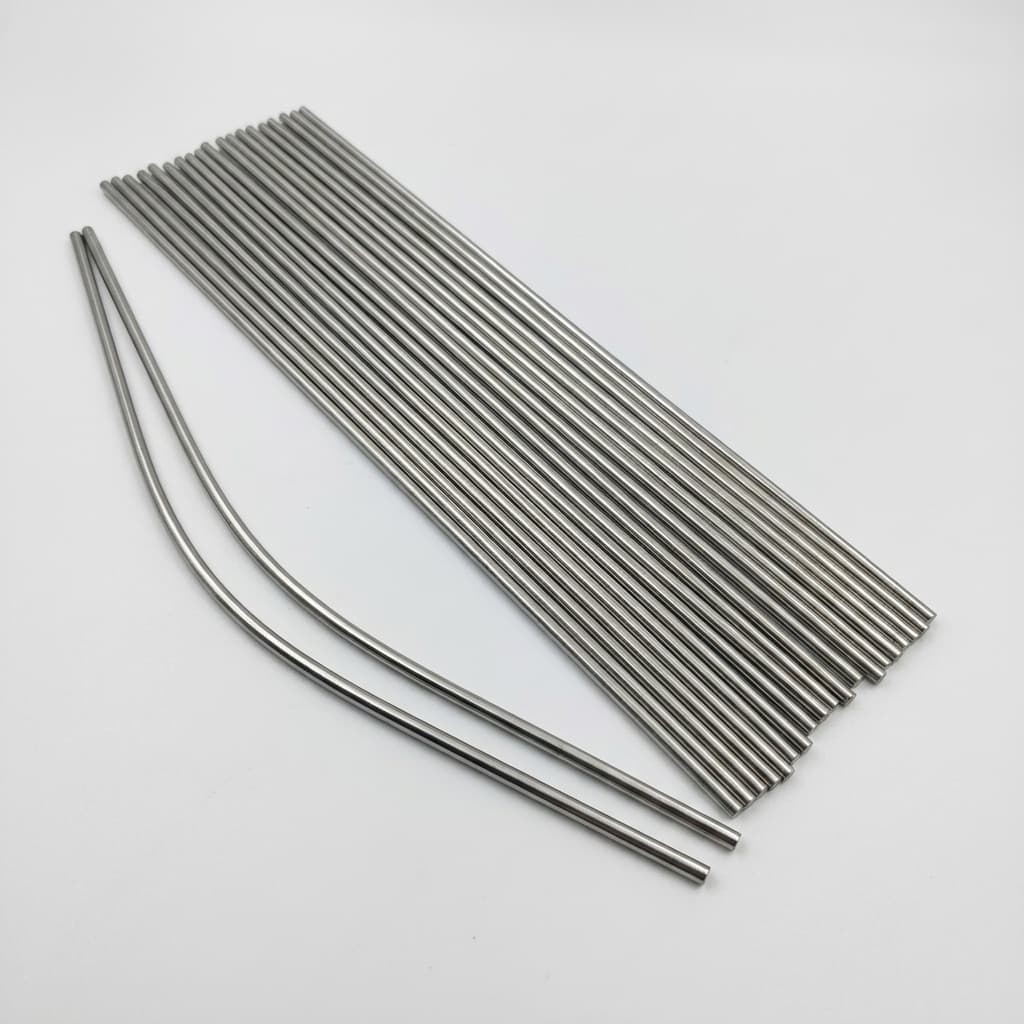
Navigating FDA QMSR and EU MDR Compliance in Medical Hypotube Sourcing: A 2026 Guide
2026 guide to FDA QMSR and EU MDR impacts on medical hypotube sourcing, supplier audits, material traceability, and compliance evidence.
The regulatory landscape for medical device manufacturing has fundamentally shifted. As of February 2, 2026, the FDA’s Quality Management System Regulation (QMSR) is in full effect, aligning the United States’ 21 CFR Part 820 with the internationally recognized ISO 13485:2016 standard. Concurrently, the European Union’s Medical Device Regulation (EU MDR) continues to enforce stringent requirements on material traceability and clinical evidence.
For medical device Original Equipment Manufacturers (OEMs)—and specifically the procurement teams, quality engineers, and supply chain managers responsible for sourcing critical components—this convergence marks the end of "check-the-box" supplier management.
Medical hypotubes are the structural backbone of minimally invasive catheters, endoscopic instruments, and structural heart delivery systems. Because these components directly contact patient tissue, blood vessels, and often serve critical functional roles (such as torque transmission or fluid delivery), the regulatory scrutiny applied to their manufacture has never been higher.
In this comprehensive guide, we dissect exactly how the 2026 FDA QMSR and ongoing EU MDR mandates change the way you must source, audit, and validate medical hypotubes. We will cover the shift to risk-proportionate supplier controls, the new visibility FDA inspectors have into your supplier audits, and how to build an inspection-ready supply chain.
Scope Note: This guide is intended for procurement professionals, quality assurance managers, and engineers at medical device OEMs navigating the 2026 QMSR transition. Last reviewed: July 26, 2026. It provides strategic guidance on supplier evaluation and risk management but does not replace legal or regulatory counsel.
If your team is matching this regulatory review to drawings, process routes, and release documentation, pair it with our laser-cut hypotube manufacturing overview and laser-cut hypotube pattern specification guide.
1. The 2026 FDA QMSR Transition: What Changed for Procurement?
For decades, U.S. medical device manufacturers operated under the legacy Quality System Regulation (QSR). While the QSR required OEMs to evaluate and select suppliers based on their ability to meet specified requirements, the documentation and enforcement often leaned toward administrative checklists.
The new QMSR changes this paradigm entirely by incorporating ISO 13485:2016 by reference. For procurement and supplier quality teams, the most impactful changes include:
A. Risk-Proportionate Supplier Controls
Under ISO 13485:2016 Clause 7.4.1, the "type and extent of control applied to the supplier and the purchased product shall be dependent upon the purchased product, the impact of the purchased product on the subsequent product realization or the final medical device, and the proportionate risk associated with the medical device."
If you are sourcing a stainless steel 304V hypotube that will be used as the proximal shaft of a Class III neurovascular microcatheter, the FDA now expects your supplier controls to be exponentially more rigorous than those applied to a Class I non-contact instrument. You must document the risk assessment that justifies your level of oversight.
B. Unrestricted Access to Supplier Audit Reports
Perhaps the most daunting change for OEMs is the FDA’s new inspection authority. Under the legacy QSR, supplier audit reports, internal audits, and management reviews were generally exempt from routine FDA inspection.
Under the QMSR, this exemption is gone. FDA investigators utilizing the new compliance inspection programs will actively request and review your supplier audit records. If your audit of a hypotube manufacturer reveals findings related to laser cutting validation or raw material traceability, the FDA will want to see how those findings were integrated into your Corrective and Preventive Action (CAPA) system and risk management file.
C. Continuous Monitoring and Re-evaluation
It is no longer acceptable to qualify a hypotube supplier once and leave them on an Approved Supplier List (ASL) indefinitely. The QMSR mandates documented, ongoing monitoring of supplier performance against established metrics (e.g., dimensional non-conformances, delivery delays, material certification errors). This data must feed directly into your continuous risk management loop.
2. EU MDR: The Mandate for Absolute Material Traceability
While the U.S. focuses on QMS harmonization, the EU MDR demands unprecedented levels of clinical evidence and component traceability throughout the device lifecycle. For medical hypotubes, this translates to strict controls over raw material provenance and manufacturing history.
The Challenge of Metal Traceability
Medical hypotubes are typically manufactured from specialty alloys such as Stainless Steel (304, 304V, 316L), Nitinol (Nickel-Titanium), or Cobalt-Chromium. The journey from a raw metallic ingot to a finished, laser-cut, and electropolished hypotube involves multiple thermal and mechanical processes (drawing, annealing, centerless grinding).
Under EU MDR (and ISO 13485), OEMs must maintain unbroken traceability. If a specific lot of Nitinol tubing fails a fatigue test in the field, the OEM must be able to trace that failure back to the exact heat lot of the raw material, the specific drawing pass, and the precise laser cutting parameters used by the supplier.
Chemical Composition and Biocompatibility
Furthermore, EU MDR stringently regulates hazardous substances. If a hypotube undergoes chemical passivation or electropolishing, the supplier must provide validated evidence that no toxic residues remain that could compromise the device's ISO 10993 biocompatibility profile. A simple Certificate of Conformance (CoC) is insufficient; OEMs increasingly require full material certifications, chemical analysis reports, and validation summaries from their hypotube partners.
3. Structural Comparison: Legacy Supplier Sourcing vs. QMSR/MDR Era
To understand the magnitude of the shift, consider how hypotube procurement practices must evolve from the legacy approach to the 2026 standard.
| Procurement Activity | Legacy QSR / Pre-MDR Approach | 2026 FDA QMSR & EU MDR Approach |
|---|---|---|
| Supplier Qualification | Send a standard QMS questionnaire; verify ISO 13485 certificate; add to ASL. | Conduct a risk assessment based on the hypotube's clinical application; perform an on-site or deep-dive desktop audit; justify the control level based on risk. |
| Documentation Review | Accept standard Certificate of Conformance (CoC) with shipments. | Require comprehensive material certifications, heat lot traceability, and access to supplier process validation (IQ/OQ/PQ) summaries. |
| Audit Transparency | Supplier audit reports kept confidential from FDA inspectors. | Supplier audit reports are "inspection-ready"; findings must be formally linked to the OEM's CAPA and risk management files. |
| Process Validation | Assume supplier has validated their laser cutting and electropolishing processes. | OEM must verify the supplier's validation protocols and ensure they meet state-of-the-art standards; validation data may be reviewed during OEM inspections. |
| Performance Monitoring | Annual review of on-time delivery and gross defect rates. | Continuous, data-driven monitoring of non-conformances, integrated with post-market surveillance and risk re-evaluation. |
| Change Control | Supplier notifies OEM of major material changes. | Supplier must notify OEM of any process, material, or equipment change; OEM must evaluate the impact on the final device's regulatory submission. |
4. Validating Special Processes in Hypotube Manufacturing
A critical aspect of both QMSR and EU MDR compliance is the control of "special processes"—processes where the resulting output cannot be fully verified by subsequent non-destructive monitoring or measurement. In medical hypotube manufacturing, several processes fall into this category and require rigorous Installation, Operational, and Performance Qualification (IQ/OQ/PQ).
Laser Cutting and Micro-Machining
When a hypotube is laser-cut to create flexible spiral patterns (like those used in neurovascular delivery systems), the heat-affected zone (HAZ) and potential micro-cracking cannot be fully inspected on every single unit without destroying the part.
Therefore, your supplier must have robust IQ/OQ/PQ documentation for their laser cutting equipment. They must prove that the parameters (power, pulse width, frequency) consistently produce a cut without compromising the metallurgical structure of the alloy. Under the QMSR, if your supplier's laser validation is deficient, the FDA may consider your finished device adulterated.
Electropolishing and Passivation
To improve fatigue life and ensure biocompatibility, hypotubes often undergo electropolishing and chemical passivation to remove surface anomalies and create a protective oxide layer. These chemical processes are highly sensitive to temperature, bath composition, and time. Your supplier must provide validation evidence that their chemical processes consistently meet standards like ASTM F86 (for passivation) and that no harmful residues are left behind.
5. Engineering & Procurement Checklist: 2026 Audit Readiness
To ensure your supply chain is resilient and compliant with the February 2026 FDA QMSR and ongoing EU MDR requirements, utilize this cross-functional checklist when evaluating medical hypotube suppliers.
- Risk-Based Classification: Have we formally documented the risk level of the hypotube based on its clinical application (e.g., implant vs. transient contact)?
- Proportionate Controls: Does our supplier quality procedure explicitly link the required level of supplier oversight to the documented risk classification?
- Audit Report Readiness: Are all past and current supplier audit reports for our hypotube manufacturers formatted and prepared for potential FDA inspector review?
- CAPA Integration: Are any findings from supplier audits actively managed and tracked within our internal CAPA and risk management systems?
- Material Traceability: Can the supplier guarantee unbroken traceability from the raw material heat lot through drawing, cutting, and final inspection?
- Validation Transparency: Has the supplier provided access to or summaries of their IQ/OQ/PQ validations for critical special processes (laser cutting, electropolishing, welding)?
- Change Notification Agreements: Do we have stringent, legally binding Quality Agreements in place that require the supplier to notify us of any manufacturing process change before implementation?
- Continuous Monitoring: Are we actively tracking supplier non-conformances and incorporating this data into our annual risk management reviews?
6. Visualizing the QMSR Risk-Based Supplier Control Model
The following workflow illustrates how OEMs must integrate hypotube supplier management into their broader Quality Management System under the 2026 QMSR requirements.
Figure 1: The continuous, risk-proportionate supplier control loop mandated by the QMSR (ISO 13485:2016) and EU MDR.
7. Frequently Asked Questions (FAQ)
Q: Do we need to re-audit all our current hypotube suppliers before the February 2026 deadline? A: Not necessarily, but you must review their current qualification status against your updated, risk-based supplier control procedures. If a supplier provides a high-risk hypotube and their last qualification was merely a paper questionnaire, you will likely need to perform a deeper audit to justify their approval status under QMSR rules.
Q: Can we still redact proprietary information from supplier audit reports if the FDA asks for them? A: Under the QMSR, the FDA has the right to review the audit reports to verify that you are adequately managing supplier risk. While some highly sensitive IP might be discussed with the investigator, you cannot redact findings, non-conformances, or validation gaps that impact device safety and compliance.
Q: What if our hypotube supplier refuses to share their IQ/OQ/PQ validation data? A: This is a critical red flag in the QMSR era. If a supplier will not share sufficient validation evidence, you cannot prove to the FDA or Notified Bodies that the component is manufactured in a state of control. You must either work with the supplier to establish a secure data-sharing agreement or find a new, transparent supplier.
Q: Does ISO 14155 clinical investigation guidance impact hypotube sourcing? A: ISO 14155 governs clinical investigations rather than day-to-day component procurement. However, if your hypotube is part of a novel device entering clinical trials, the clinical risk management file should align with your supplier risk management file. Material inconsistencies, unverified special processes, or weak traceability can still delay trial readiness.
8. Sources and Regulatory References
- FDA QMSR FAQ: Quality Management System Regulation - Frequently Asked Questions - confirms the February 2, 2026 effective date, ISO 13485:2016 incorporation, new inspection process, and FDA access to supplier audit reports.
- ISO 13485:2016: Medical devices - Quality management systems - Requirements for regulatory purposes - baseline standard for medical device quality management systems incorporated into FDA QMSR.
- European Commission: Medical devices - new regulations - EU MDR/IVDR regulatory overview and implementation context.
9. Conclusion: Building a Resilient, Audit-Ready Supply Chain
The transition to the FDA QMSR and the rigorous demands of the EU MDR should not be viewed merely as regulatory burdens. They represent an opportunity to build a more robust, transparent, and resilient supply chain.
By demanding high-quality evidence, precise material traceability, and transparent validation data from your medical hypotube suppliers, you mitigate the risk of catastrophic device failures, expensive product recalls, and delayed regulatory submissions.
As you navigate the 2026 landscape, partner with component manufacturers who understand the difference between supplying a metal tube and supplying a comprehensively validated medical device sub-assembly.
Are you evaluating your supply chain for 2026 compliance?
Our manufacturing facilities operate under strict ISO 13485:2016 certified quality management systems, providing the state-of-the-art validation data, material traceability, and engineering transparency required for modern regulatory submissions.
Contact our engineering and quality teams today to discuss your next medical hypotube project and request our validation documentation summaries.
Author

More Posts
How to Specify Medical Hypotube Tolerances to Reduce Cost and Lead Times
Medical hypotube tolerances guide for RFQ teams: set OD, ID, wall, concentricity, straightness, and finish limits before you request a supplier DFM review.
Medical Hypotube Miniaturization: Navigating Ultra-Thin Walls for Neurovascular Catheters
Medical hypotube miniaturization guide for ultra-thin neurovascular catheter walls. Compare tolerances, materials, failure modes, and RFQ trade-offs.
How to Specify Laser Cut Hypotube Patterns for Flexible Medical Devices
A technical engineering guide on designing and specifying laser-cut patterns for hypotubes, including spiral, interlocking, and hinge cuts, with precise RFQ dimensioning tips.