
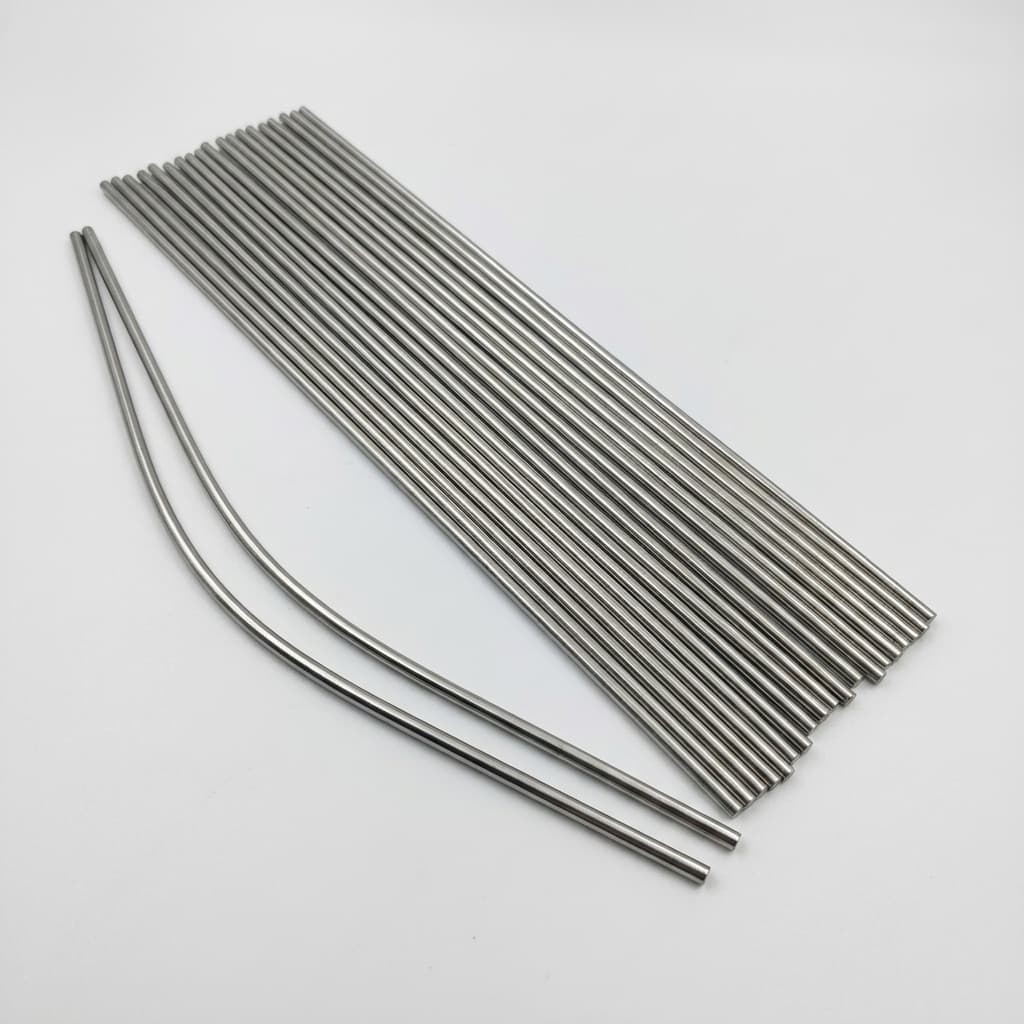
Nitinol vs. Stainless Steel in Catheter Design: Material Selection Guide
A technical evaluation on choosing between nitinol tubing and stainless steel hypotubes for your next catheter or endoscope project.
When designing modern interventional catheters, steerable endoscopes, or stent delivery systems, one of the most critical decisions an engineering team faces is selecting the right material for the tubular components. The debate almost always comes down to two industry-standard materials: Nitinol (Nickel-Titanium alloy) and Stainless Steel (typically 304V or 316L).
In this guide, we break down the fundamental differences between these materials, provide a side-by-side engineering comparison, and highlight practical sourcing considerations to ensure your RFQs yield fast and accurate quotes.
1. The Core Engineering Differences
At a microscopic level, stainless steel and nitinol respond completely differently to applied stress. Stainless steel relies on standard elastic deformation, while Nitinol utilizes a solid-state phase transformation (Austenite to Martensite). This difference dictates how the tube behaves inside the human body.
Figure 1: Stress-Strain schematic comparing Stainless Steel to Superelastic Nitinol.
Technical Comparison Matrix
| Property | Stainless Steel (304V) | Nitinol (Superelastic) | Why Buyers Should Care |
|---|---|---|---|
| Max Recoverable Strain | ~0.5% | Up to 8% | Nitinol can recover far more strain than stainless steel, making it a frequent choice for highly tortuous pathways. |
| Tensile Strength | High (Up to 2000 MPa) | Moderate (~1000 MPa) | Stainless steel offers superior pull-strength and column strength (pushability) through calcified lesions. |
| Modulus of Elasticity | ~200 GPa | 40-75 GPa (Variable) | Stainless steel is comparatively stiff and often selected for torque response. Nitinol is lower-modulus and more compliant. |
| Laser Cutting Speed | Fast (Low cost) | Slow (Higher cost) | Nitinol requires highly specialized thermal management during laser cutting to avoid destroying its superelastic properties. |
| Welding/Joining | Excellent | Difficult | Stainless steel is easily welded. Nitinol often requires specialized adhesives, crimping, or advanced laser welding techniques. |
2. The Case for Stainless Steel (304V / 316L)
Stainless steel hypotubes have been the backbone of the medical device industry for decades. They are known for predictable mechanical properties and excellent machinability.
Key Advantages:
- High Torquability: Stainless steel provides excellent 1:1 torque response. When the physician rotates the proximal hub, that rotation is directly and immediately translated to the distal tip.
- Stiffness & Pushability: For procedures requiring the catheter to cross tough calcified lesions, the high column strength of a 304V stainless steel hypotube can be a strong fit.
- Cost-Effectiveness: Raw material costs and laser cutting times are significantly lower compared to nitinol. High-volume production is easily scaled.
- Ease of Assembly: Stainless steel is extremely easy to laser weld or join to other components, such as hubs, platinum-iridium marker bands, or braids.
Best-Fit Applications:
- Proximal catheter shafts where pushability is the priority.
- Endoscope rigid shafts.
- Needles and biopsy cannula.
3. The Case for Nitinol (Nickel-Titanium)
Nitinol is a "smart" alloy famous for two unique properties: Shape Memory and Superelasticity. For catheter hypotubing, the superelastic property is what changes the game.
Key Advantages:
- Extreme Kink Resistance: Nitinol can undergo extreme deformation (bending into tight loops) and recover its original straight shape without plastic deformation (kinking).
- Constant Force Delivery: The unique stress-strain plateau of nitinol means it applies a constant, gentle outward force regardless of how much it is deformed—a critical feature for self-expanding stents.
- Corrosion Resistance and Clinical History: Nitinol has a long medical-device history and can be specified for demanding anatomy when surface condition, nickel release, fatigue, and validation requirements are controlled.
Best-Fit Applications:
- Distal catheter segments navigating the neurovascular or peripheral arteries.
- Self-expanding stents and stent delivery systems.
- Deflectable tips in steerable endoscopes.
4. Hybrid Designs: The Best of Both Worlds
Many advanced catheter designs no longer rely on a single material. A highly effective "hybrid" design utilizes a stainless steel hypotube for the proximal shaft (maximizing pushability, torquability, and cost reduction) which is then laser-welded or mechanically crimped to a nitinol distal segment (maximizing flexibility, trackability, and kink resistance).
Buyer Tip: If you are designing a hybrid system, specify your transition joint testing requirements (e.g., tensile pull test > 15N) directly on the RFQ.
5. RFQ Sourcing Checklist for Buyers
When sending an RFQ to a medical tube manufacturer, leaving out critical specifications will delay your quote and increase risk. Ensure your drawing includes:
- Explicit Material Grade:
- For Stainless: Specify 304, 304L, 304V (Vacuum Melted for higher purity/strength), or 316L.
- For Nitinol: Specify standard Superelastic (SE508) and the required Active Af (Austenite Finish) temperature (e.g., < 15°C for body temperature superelasticity).
- Dimensions & Tolerances: Clearly state OD, ID, and Wall Thickness with precise tolerances (e.g., OD: 0.040" +/- 0.0005").
- Surface Finish Requirements: Specify if you need burr-free electropolishing or standard passivation. For nitinol, clearly define the required oxide state (e.g., Light Oxide, Dark Oxide, or Oxide-Free/Polished).
- Laser Cut Pattern: Provide the pitch, slot width (kerf), and un-cut bridge dimensions.
Copy-Paste RFQ Template
To streamline your sourcing, copy and paste this template into your inquiry email:
SUBJECT: RFQ - [Nitinol / 304V Stainless] Tubing - [Project Name]

Material: [e.g., SE508 Nitinol, Active Af < 15°C]
OD x ID: [e.g., 0.040" +/- 0.0005" x 0.030" +/- 0.0005"]
Surface Finish: [e.g., Light Oxide / Electropolished Burr-Free]
Straightness: [e.g., 0.002" per inch]
Secondary Operations: [e.g., Laser Welding to Pt-Ir Marker Bands]
EAU (Annual Quantity): [e.g., 5,000 pcs]
(If your design includes marker bands, be sure to read our guide on Platinum-Iridium vs. Gold Marker Band Tolerances).
At Medical Hypotubes, our engineering team has extensive experience machining both materials. We provide rapid prototyping and high-volume production for both laser-cut stainless steel and nitinol components. Contact our team today to review your drawing and discuss the optimal material strategy for your next medical device project.
Author

Categories
More Posts
How to Specify Laser Cut Hypotube Patterns for Flexible Medical Devices
A technical engineering guide on designing and specifying laser-cut patterns for hypotubes, including spiral, interlocking, and hinge cuts, with precise RFQ dimensioning tips.
Medical Hypotube Miniaturization: Navigating Ultra-Thin Walls for Neurovascular Catheters
Medical hypotube miniaturization guide for ultra-thin neurovascular catheter walls. Compare tolerances, materials, failure modes, and RFQ trade-offs.

Navigating PFAS Restrictions in Medical Device Coatings: Alternatives to PTFE for Hypotubes
A comprehensive guide for procurement and engineering teams on transitioning away from PTFE-coated medical hypotubes ahead of EU REACH PFAS restrictions. Evaluating silicone, hydrophilic, Parylene, and electropolished bare metal alternatives.