
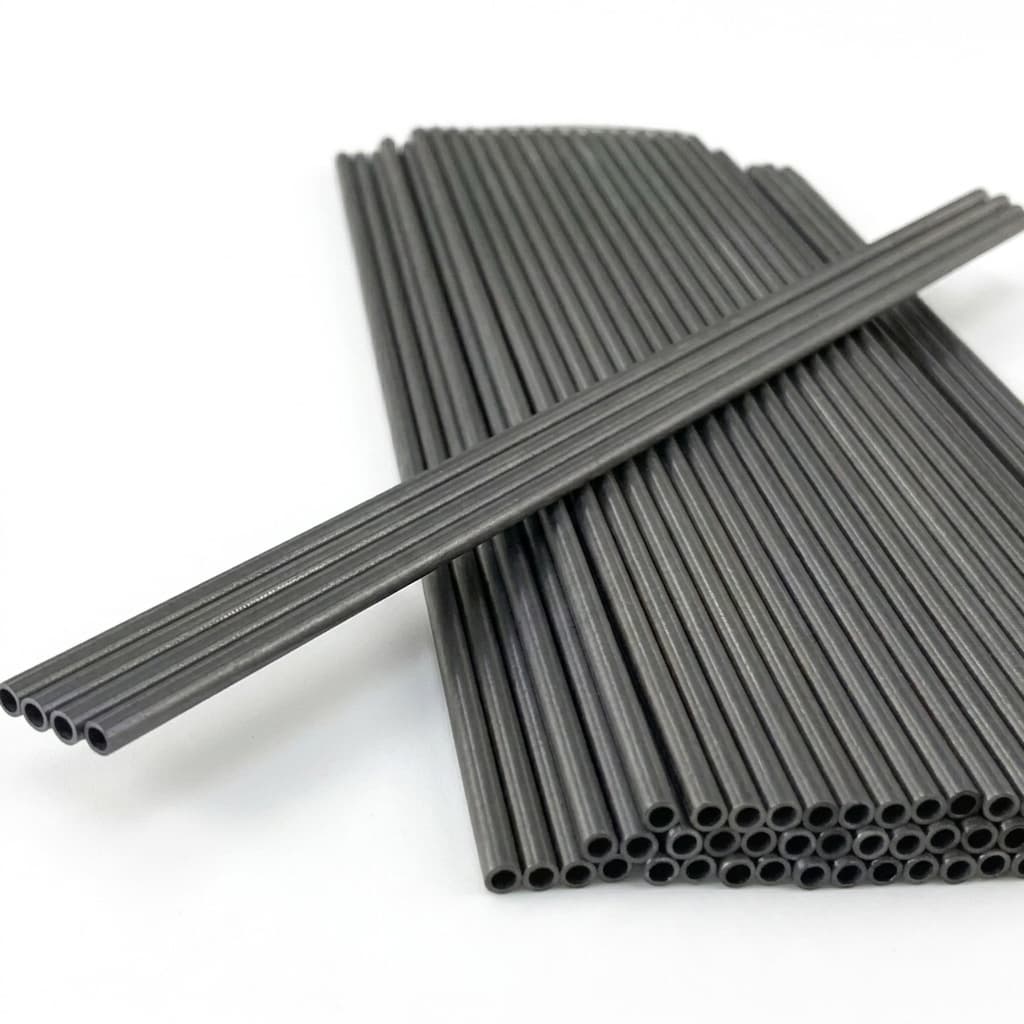
Femtosecond vs. Nanosecond Laser Cutting for Medical Hypotubes: A Procurement Guide
Compare femtosecond and nanosecond laser cutting for medical hypotubes. Learn how to eliminate the heat-affected zone (HAZ) and reduce total cost of ownership.
The landscape of minimally invasive medical devices is constantly shrinking, yet the physical demands placed on components like medical hypotubes are exponentially increasing. When engineers design steerable catheters, neurovascular delivery systems, or intricate structural heart devices, they often rely on laser-cut hypotubes to provide a precise balance of trackability, pushability, and torque transmission.
However, moving from a CAD model to a sourced component introduces a critical manufacturing decision that frequently trips up both R&D and procurement teams: choosing the right laser cutting technology.
For years, nanosecond (and microsecond) fiber lasers were the industry standard. But as device walls become thinner and materials like Nitinol become ubiquitous, femtosecond laser cutting has emerged as the premier standard for high-end medical hypotubes.
This guide provides a comprehensive framework for buyers, procurement teams, and engineers to evaluate femtosecond versus nanosecond laser cutting. We will dissect the physics, material interactions, and the true total cost of ownership (TCO) so you can specify the right process for your next RFQ.
Scope note - published July 23, 2026: This guide is written to support design-for-manufacturability and procurement strategies for laser-cut metal hypotubes. It is intended to help OEM buyers optimize RFQs. It does not replace formal ISO 13485 validation, FDA/MDR regulatory submission testing, or supplier-specific process validation.
For a quote-ready capability overview, compare this guide with our laser-cut hypotube manufacturing page, then send drawings through Contact for a process review.
1. The Physics of Cutting: Cold Ablation vs. Photothermal Melting
To understand the cost and quality differences between these two technologies, we must look at the pulse duration—how long the laser energy is applied to the hypotube in a single "burst."
- Nanosecond Lasers ($10^-9$ seconds): These lasers operate on a photothermal principle. The laser pulse lasts long enough for the material to absorb the energy, melt, and eventually vaporize or be blown away by assist gas. Because the pulse is longer than the thermal relaxation time of metals, heat conducts outward into the surrounding material.
- Femtosecond Lasers ($10^-15$ seconds): These lasers operate via cold ablation. The pulse duration is so incredibly short that the energy is deposited and the material is instantly vaporized before heat has the physical time to diffuse into the surrounding crystalline structure.
Visualizing the Heat-Affected Zone (HAZ)
The fundamental difference between these two mechanisms is the creation of the Heat-Affected Zone (HAZ).
When a nanosecond laser leaves a HAZ, it fundamentally alters the metallurgy of the hypotube edge. It can cause grain growth, phase shifts, and micro-cracking. Furthermore, the molten material that is not fully blown away solidifies on the edge as slag, dross, or recast. This mandates aggressive post-processing.
2. Material Integrity: Why Nitinol Demands Femtosecond Processing
The choice between laser technologies cannot be made independently of the material specification. The impact of HAZ varies wildly depending on what alloy you are using.
Nitinol (NiTi)
Nitinol is an exotic superelastic and shape-memory alloy. Its entire functionality depends on precise phase transformation temperatures (Austenite Finish, or $A_f$).
When a nanosecond laser applies heat to Nitinol, the thermal gradient alters the $A_f$ temperature locally at the cut edge. This leads to unpredictable mechanical behavior, loss of superelasticity, and extreme susceptibility to fatigue failure. Additionally, the recast layer left by thermal lasers on Nitinol is highly oxidized (Titanium Oxide) and brittle, acting as a direct catalyst for micro-cracks during cyclic loading.
Procurement Rule: If your catheter design relies on Nitinol hypotubes—especially for hinge points, continuous articulation, or steerable segments—femtosecond or another validated ultrashort-pulse process should be the default RFQ requirement. If a supplier proposes nanosecond fiber cutting to reduce initial cutting cost, require coupon micrographs, $A_f$ verification, edge-condition evidence, and fatigue data before treating it as production-ready.
Stainless Steel (304 / 304V / 316L)
Stainless steel is significantly more forgiving. It does not have phase transformation dependencies like Nitinol, meaning it can absorb thermal input without losing its core mechanical structure.
However, nanosecond laser cutting on thin-wall stainless steel still creates dross and HAZ, which must be removed via mechanical deburring, chemical etching, and electropolishing (to meet ASTM F86 passivation standards).
Procurement Rule: For larger-diameter, thick-walled stainless steel hypotubes with simple cut patterns, nanosecond lasers can be adequate and more cost-effective. For ultra-thin stainless steel walls (e.g., < 0.002") with complex micro-slots, the force required to mechanically deburr nanosecond cuts can crush the tube. In those miniaturized cases, femtosecond cutting may be required even for stainless steel. For thin-wall sizing context, see the 0.012 inch OD hypotube guide.
3. The True Cost of Ownership (TCO): Rethinking the RFQ
The most common mistake procurement teams make when sourcing laser-cut hypotubes is evaluating the supplier's quote purely on "Cost per Cut Length."
Nanosecond laser systems are significantly cheaper to purchase and run faster than femtosecond lasers. If you look purely at machine time, nanosecond cutting always wins. But medical device manufacturing requires validated, clean, biocompatible finished goods.
The Hidden Costs of Nanosecond Lasers
- Electropolishing & Chemical Etching: To remove the recast layer and HAZ left by a nanosecond laser, the part must undergo aggressive chemical etching and electropolishing. This adds days to the lead time and introduces chemical variables that must be strictly controlled.
- Yield Loss / Scrap Rates: Removing 0.0005" of material via electropolishing to clean up a nanosecond cut on an ultra-thin wall hypotube makes dimensional tolerance control incredibly difficult. Scrap rates soar as parts become too thin or out of concentricity.
- Biocompatibility and Particulate Risk: If dross is not fully removed from the inner diameter (ID) of the hypotube, it can detach during use or complicate downstream ISO 10993 and particulate-risk reviews.
The Femtosecond Economic Advantage
While a femtosecond laser is a major capital expenditure for the contract manufacturer (and carries a higher hourly rate), it can produce a part that is much closer to the finished edge condition right off the machine. Because HAZ, recast, and burr formation are greatly reduced when the process is validated, aggressive electropolishing can often be reduced or eliminated. The hypotube may only require standard ultrasonic cleaning, light edge rounding, and mild passivation before assembly.
By reducing secondary manufacturing steps, femtosecond cutting can result in a lower Total Cost of Ownership (TCO), tighter final tolerances, and faster lead times from raw material to finished sub-assembly.
4. Feature Comparison Table
Below is a structured comparison for procurement and engineering teams evaluating the two technologies for a medical hypotube application.
| Decision Matrix Dimension | Femtosecond Laser (Cold Ablation) | Nanosecond / Fiber Laser (Photothermal) |
|---|---|---|
| Heat-Affected Zone (HAZ) | Negligible when validated; ask for cross-section evidence. | Process-dependent HAZ plus recast/dross risk; verify by etched cross-section. |
| Nitinol Compatibility | Excellent. Best fit when superelasticity and $A_f$ stability drive the design. | Risky. Requires supplier proof for micro-cracking, $A_f$ shift, and fatigue behavior. |
| Stainless Steel Compatibility | Excellent for ultra-thin walls and micro-features. | Good for thicker walls (>0.003") and standard profiles. |
| Edge Quality & Recast | Low-burr, sharp edges with minimal recast in validated settings. | Leaves slag, recast layers, and micro-burrs on edges. |
| Post-Processing Required | Minimal in many cases (cleaning, passivation, or light edge rounding). | Often extensive (mechanical deburring, etching, heavy electropolishing). |
| Cutting Speed (Throughput) | Slower per part. | Much faster per part. |
| Tolerance Capabilities | Micron-level accuracy; commonly quoted around ±2 to 5 µm, supplier-specific. | Moderate precision; commonly quoted around ±10 to 25+ µm, supplier-specific. |
| Overall TCO | Often lower TCO for complex, delicate, or Nitinol components. | Often lower TCO for simple, thick-walled, robust SS components. |
5. Laser-Cut Hypotube Procurement Checklist
When drafting an RFQ for laser-cut hypotubes, do not leave the laser technology choice ambiguous. Use this checklist to ensure your supplier quotes the correct process and accounts for secondary operations:
- Specify the Maximum Allowable HAZ: Explicitly state the maximum allowable heat-affected zone depth in microns. If the acceptance criterion is no detectable HAZ, require the supplier to quote femtosecond/ultrashort-pulse processing or provide equivalent metallurgical evidence.
- Define the Edge Condition Requirement: Indicate whether parts must be "burr-free directly from cut" or if "electropolishing to achieve burr-free condition" is permitted.
- Mandate Nitinol Processing Methods: If quoting Nitinol, specify that laser processing must not shift the raw material's $A_f$ temperature beyond a specific tolerance ($\pm 5^\circ$C is standard).
- Request a Route Sheet Breakdown: Ask the supplier to break down the quote into "Laser Cutting Cost" vs. "Post-Processing/Polishing Cost." This exposes the hidden TCO of nanosecond lasers.
- Specify ID Cleanliness: For hypotubes where a guidewire will pass through the internal diameter, stipulate zero ID spatter or dross. Femtosecond processing usually reduces this risk; nanosecond cutting requires aggressive ID flushing, honing, or validated inspection.
- State Passivation Standards: Confirm whether the final part must meet ASTM F86 (Stainless Steel) or specific ISO 10993 cytotoxicity parameters.
6. Frequently Asked Questions (FAQ)
Can I just use a nanosecond laser and polish the part heavily?
For standard stainless steel, yes. However, for ultra-thin wall hypotubes (e.g., 0.0015" wall), aggressive electropolishing will remove too much base material, causing the tube to fail mechanical pushability tests or fall out of outer-diameter (OD) tolerance.
Why is femtosecond laser cutting so much more expensive per hour?
Femtosecond laser sources are highly complex, relying on chirped-pulse amplification and sophisticated optics. The capital equipment cost for the contract manufacturer is often 3x to 5x higher than a standard fiber laser. However, this hourly rate is offset by the elimination of chemical etching and deburring stages.
Does femtosecond cutting replace electropolishing entirely?
Not always. While femtosecond cutting can leave a clean, low-burr edge, medical device OEMs may still require a light electropolish to round the sharp edges (to prevent cutting into polymer catheter jackets) or to maximize overall surface corrosion resistance. However, this is a controlled, minimal polish, rather than a heavy material-removal operation.
Is water-jet laser cutting an alternative?
Water-jet guided lasers (where the laser is fired through a micro-jet of water) help cool the part and reduce HAZ, acting as a middle ground. However, for the smallest micro-slots in neurovascular hypotubes, femtosecond ablation is commonly treated as the high-end baseline for dimensional accuracy.
7. Sources and References
- University of Manchester / Applied Physics A: Underwater femtosecond laser micromachining of thin nitinol tubes for medical coronary stent manufacture - Peer-reviewed evidence on femtosecond processing of thin Nitinol tubes and the reduction of HAZ, debris, spatter, and recast.
- Lasers in Manufacturing Conference / ADMEDES: Heat-affected zone analysis of fiber laser cut medical devices and its dependencies regarding laser and design parameters - Process study showing how fiber-laser parameters, strut geometry, HAZ, recast, and dross interact in Nitinol medical devices.
- ASTM International: ASTM F2063-18 Standard Specification for Wrought Nickel-Titanium Shape Memory Alloys for Medical Devices and Surgical Implants - Baseline Nitinol material requirements; confirm the active revision with QA/regulatory teams before release.
Ready to Optimize Your Catheter Design?
The line between a successful prototype and a scalable, high-yield production part often comes down to laser technology selection. Stop battling micro-cracks and unpredictable Nitinol fatigue limits.
Whether you need ultra-thin wall stainless steel or complex Nitinol steerable segments, our engineering team can review your CAD files for manufacturability and recommend the optimal cutting technology to minimize your TCO.
Contact our engineering team today to discuss femtosecond laser capabilities for your next medical hypotube project.
Author

Categories
More Posts
Radiopaque Marker Bands: Platinum-Iridium vs. Gold for Catheter Visibility
A technical comparison of Pt-Ir, Gold, and Tantalum marker bands, with critical RFQ tolerancing guides for catheter assembly.
Nitinol vs. Stainless Steel in Catheter Design: Material Selection Guide
A technical evaluation on choosing between nitinol tubing and stainless steel hypotubes for your next catheter or endoscope project.
Electropolishing Medical Hypotubes: Why Burr-Free Surface Finishing Matters
Discover why electropolishing is a critical post-processing step for laser-cut medical tubing, detailing Ra surface roughness targets, fatigue resistance, and burr-free inspection standards.